
The Gambia v. Myanmar

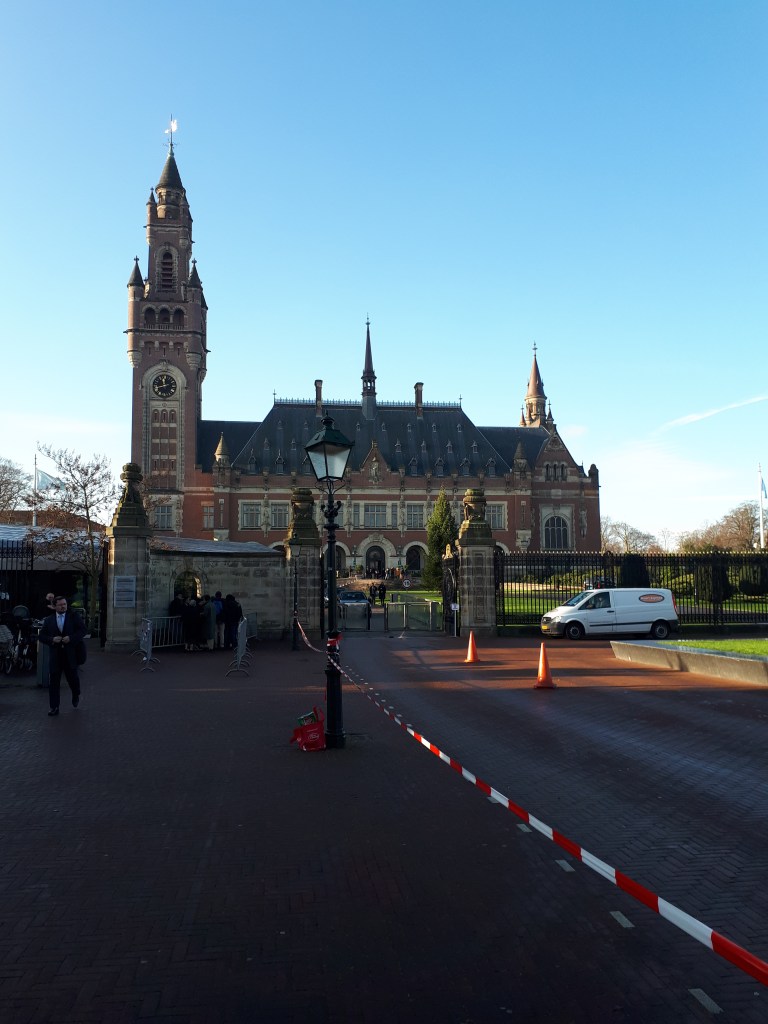
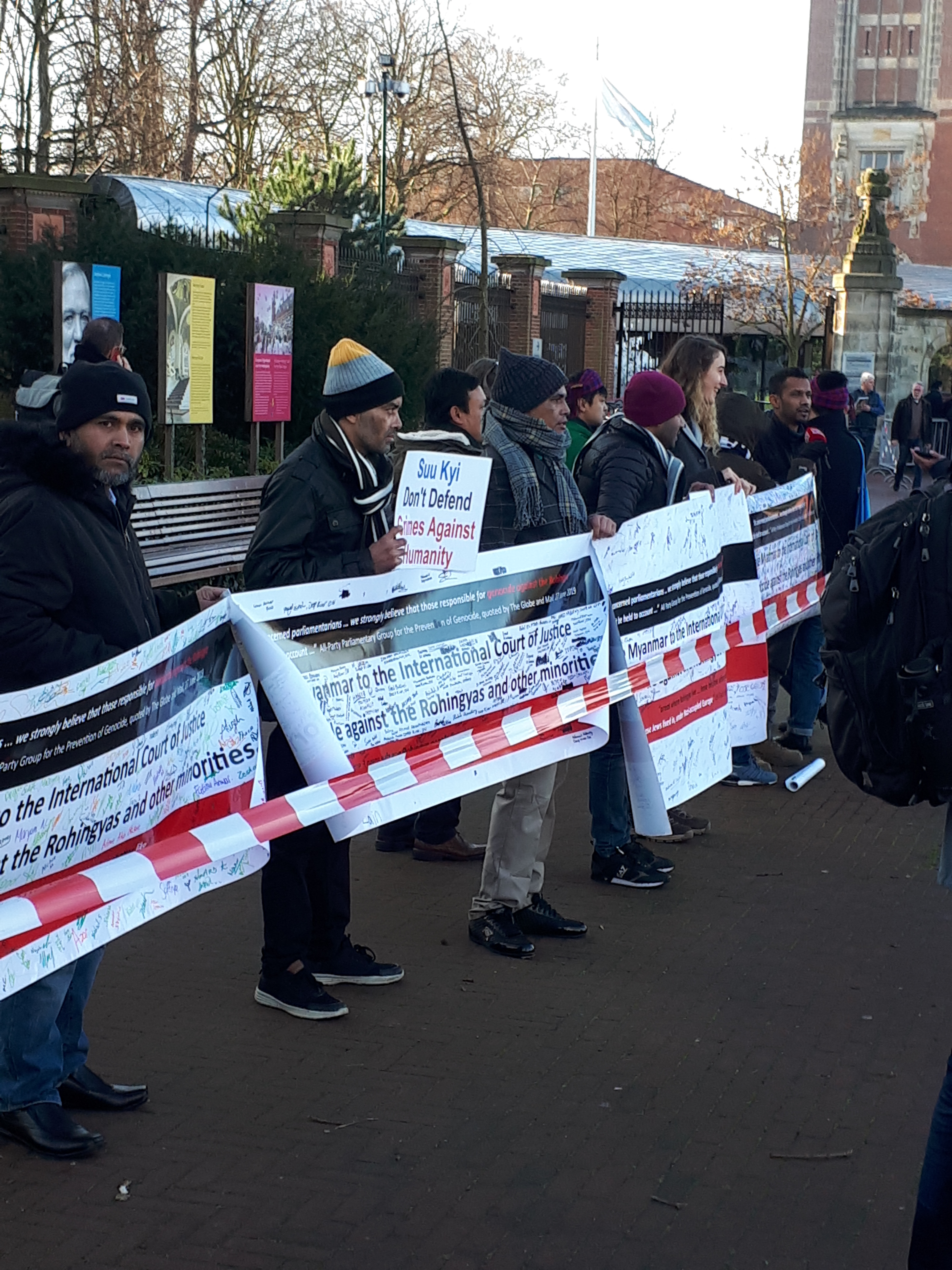
Last week, I was fortunate enough to be able to take a trip to The Hague to follow the legal case brought against Myanmar by The Gambia. I was luckier still to get one of the tickets to watch the case inside, after waiting in the cold from 5am. The case regards the genocide in Rakhine state against the minority Rohingya population. ‘Genocide’ is referred to as the crime of crimes, and it is a crime the authorities in Myanmar have continuously denied. The evidence is quite overwhelming, and the Gambia made a concrete and compelling case at the International Court of Justice (ICJ) last week. The stories from survivors are horrific, including instances of gang rape, children being thrown into fires, and homes set ablaze. State Counsellor Aung San Suu Kyi, Myanmar’s de-facto leader who shares power with the military in a quasi-civilian democratic state, travelled to The Hague to personally defend Myanmar against allegations of genocide. The world’s eyes were once again on the Nobel Laurette democracy icon whose struggle in the 1990s against the military brought her international fame. She stood in the courtroom with a certain grace reminiscent of her past. But the lady before the court was a lot different to the lady that the international community once loved. There she spoke and denied allegations of genocide. She acknowledged that there may have been a disproportionate response from the ‘Tatmadaw’ following attacks on police border posts by the Arakan Rohingya Salvation Army (ARSA), but she stood by the clearance operations as legitimate counter-terrorism efforts. She also pleaded that the court leave Myanmar to Myanmar and reject the provisional measures requested by The Gambia. Many in Myanmar support their leader, Aung San Suu Kyi. Which makes me sad, as this not about Aung San Suu Kyi. This is about human beings. How human beings perceive themselves and others, and whether they view other humans as worthy of the same rights that they perceive themselves to deserve. Myanmar has been a country and a people that have taken my heart, their generosity and grace towards me is beyond any welcome I’ve ever seen. But there’s this dark side to a lot of them that they don’t want to make light. Not all of them of course, but many in Myanmar do treat the Rohingya as sub-human. They can’t see the dark, that hatred that festers towards another people. Can any of us really see the faults in ourselves, and how do we make sure we can always see those faults so we can change, to perfect ourselves. I think values and principles offer us the best safeguard. If we understand that we ourselves are worthy of human rights because we understand our identity as human beings, then we can respect the human rights of those different to us because we still see them as human beings. When our identity gets caught up on ethnicities, nationalities, or race, that’s when we start to calculate who is worth more than who. When we realise that by denying another ethnicity their human rights, we in affect allow other ethnicities to make the same error of judgment and deny ours because of our ethnicity. When the method for determining who gets what rights because of certain differences becomes stand practice, that’s when we undermine our own human rights and the rights of others. It is either all human beings get human rights, or none get human rights, there is no justification of anywhere in between. For the sake of our human rights then, to best protect them we have to stand up and protect the rights of others. An attack on human rights is an attack on us all, for are we not all human. And one day I hope that many in Myanmar who see the Rohingya as their enemy, will see them as human. Hopefully this case will get the Rohingya some measure of justice, however small. We’re expecting the court to rule on the provisional measures requested by The Gambia next month to help safeguard the Rohingya still remaining in Rakhine. Unfortunately, the international community seems to be losing its grit in dealing with human rights, as human rights violations are becoming standard practice around the world. Here in the UK, the new government is expected to amend the Human Rights Act, the days are getting darker. What light that remains for peace, justice and a dignified human existence shines from the United Nations, the NGOs and charities working tirelessly for the humanitarian cause, in a world where money is of more worth than the human being. That light is worth fighting for.
“Good Luck” typed the Ambassador

Ronen Gilor, the Israeli ambassador wished Myanmar “Good luck” before Myanmar’s trial at the International Court of Justice. “Good Luck.” “Good Luck” getting away with crimes against humanity. “Good Luck” getting away without serious penalty for committing genocide. “Good luck” for defending a military campaign that saw human beings be raped, killed and set on fire. The tweets were sincere. Later they were acknowledged as a mistake by Israel’s Foreign Ministry, and the country reaffirmed its condemnation of the atrocities committed in Myanmar. These are our leaders in the Global 21st Century. These individuals shape our world, and are largely entrusted by us as citizens. I am lost for words mostly. How can anyone wish anyone good luck to get away with an act as evil as that. Crimes against ethnic minorities are becoming standard practices. As long as there’s always someone else to blame, then those responsible for mistakes can keep making them. The world needs to look back at the atrocities of the recent past, and reaffirm to never see them again. It’s wishful thinking at best, but reflection might be the best way at avoiding these crisis in the future. For when we acknowledge a mistake, do we not undo its power by learning from it. For then we have not a mistake but a lesson. That’s not any excuse for any crime of that nature, but instead it’s a challenge for us as citizens to recognise the tension and the blame before the horrors that unfolded in the last century. So that we can understand not to fall for the kind of rhetoric that dehumanises human beings, that puts the blame on a group’s shoulders. We’re better than that, and we need solutions not leaders who shuffle round the blame like people are a deck of cards.

Human Rights Violations Undermining Efforts for Peace

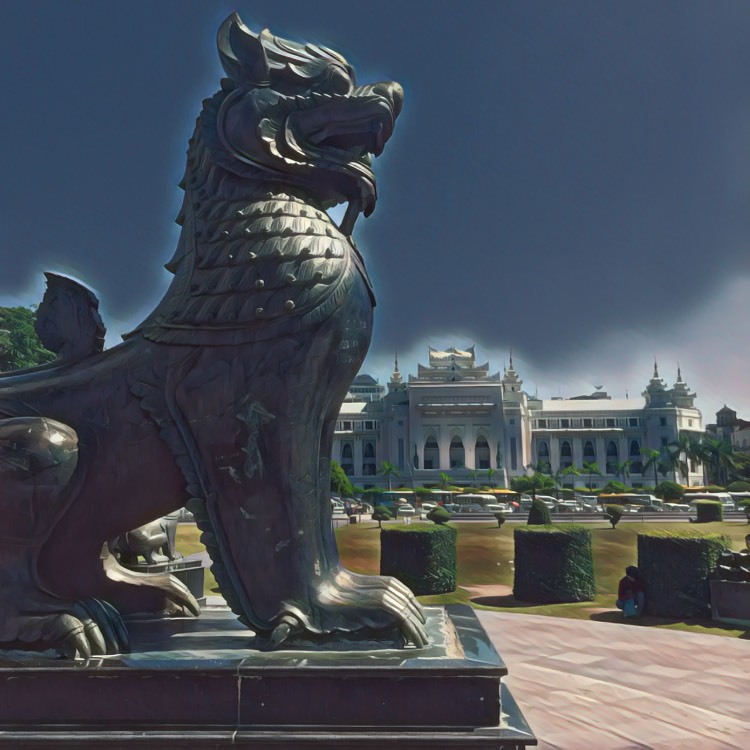
The Burmese Chinthe, a mythical lion-like creature that protects pagodas and riches, and will bring you good luck to increase those riches.

Whether it’s Myanmar, or outside in other corners of the world, one thing that always undermines the chances of a prosperous peace are human rights violations. When Governments, or militaries violate the rights of human beings, they perpetuate the notion that some peoples are ‘lower'(second-class), and some are ‘higher'(first-class). Such inequality between human beings will inevitably lead to conflict. Those that class themselves as ‘higher’, i.e. that their status is better, their characteristics are better etc., will feel the need to maintain that status by preying on those that are weaker. Those that can be deemed ‘lower’ in a society will suffer from the ‘higher’ who help maintain that human beings should be divided into a rankings based system, addressing an inferiority complex as they beat others down to feel superior. This does not create peace. Peace can only be achieved by harmonising groups that have previously been at a state of dissonance. Every time the central government in Myanmar commits human rights atrocities, it embeds further the dissonance between the groups it would eventually like to make peace with. If the central government are serious about national reconciliation they need to approach any conflict with the upmost respect for basic human rights. If there is a situation which requires the use of force, force is best carried out when it is restrained. In 2016 and 2017, when the violence broke out in Rakhine, there was no restraint. And now international legal challenges, negative economic impacts, and activist campaigns have brought down a damning hammer on Myanmar’s status on the world stage. What’s interesting is noting just how little has been done to repatriate the Rohingya and allow them to return with both the guarantees of citizenship and safety. When these events happen, they undermine trust significantly, and this distrust flows through the relationships of all parties to the conflict. Recommitting to respecting human rights is the first step towards resurfacing efforts for peace, but words can’t do it alone, action needs to be taken. Now around the world calls for justice are being made, and the International Criminal Court have moved further into their investigation. I often wonder if there’s any hope of justice for the victims or the ‘lower’ in Myanmar’s society, they do deserve it. Myanmar’s refusal to acknowledge wrongdoing will only make the situation worse, they need to start making concessions to blunt the worse impacts that these atrocities have cost them. Making a firm commitment to upholding human rights, and addressing the lack of respect around human rights, housed in the minds of the Burmese soldiers is a step in the right direction. But when doing wrong in this world, it is always best to start off with an apology.