
Manufactured Crisis – Myanmar

I think that in today’s society we have a responsibility to not confirm something as true automatically, we live in what is referred to as the age of ‘post-truth’ politics. Misinformation is everywhere and it is hurting our democracies. Politics is an ugly game, when it shouldn’t be, it should be about focusing on solving problems, but what is often happening is that problems are being deliberately created. I’ll use Myanmar as a reference point again, as most of my research is heavily concentrated on ‘The Golden Land.’ With reference to the Rohingya genocide in Rakhine it looks increasingly clear that it was deliberate. That it wasn’t just mutual distrust and anger that blew up into something uncontrollable. It was controllable, and it was deliberate. So many supporters flock to the parties and the leaders that are actively pursuing the solutions to the problems so many people care about. But we have to view it as an active responsibility of the citizen, to understand why the problem exists, and what factors perpetuate it. Because in reality a lot of the problems that have been created, are designed to maintain and increase power. Author of ‘The Rohingyas, Inside Myanmar’s Hidden Genocide,” Azeem Ibrahim illustrates this point perfectly; “There is emerging evidence that the old military regime funded and supported one major faction among the extremists to foster unrest.” To try and make this point clear, I’ll break it down. The problem is the unrest, and the solution to that unrest is the military. Only behind the curtains of the political play, the military are facilitating that unrest, so that they will always be relevant, always a necessary part of the political order to maintain ‘stability.’ This is the problem of our world. Powerful people and groups create problems. They pose themselves as the solutions, and that’s how they maintain their relevance and power. It’s a dirty game. It’s disgusting, dishonourable, but it’s reality. A lot of Brexit – supporting conservatives blamed the problems of the NHS on an incorrect figure that goes to the EU, which could instead go to the NHS. Yet the conservative party are the ones who are dismantling our NHS, and are the partial root cause of our NHS crisis in the country. The EU served as a useful scapegoat for dishonourable politicians, whose priorities are power over service. The problems we face today, are of a scale unimaginable to yesterday, that’s because we lose sight of truth every day that lie gets repeated after lie. The only way we can solve problems is with truth, and the only way we can know truth is by being honest with ourselves and others. For when we lie to one another, we blur the realms of lies and truths. Unable to find truth is when we sink, because if we can’t ever find the root cause of the problem, we will never be able to solve it.

Problem Solving – Envisaging a Better World

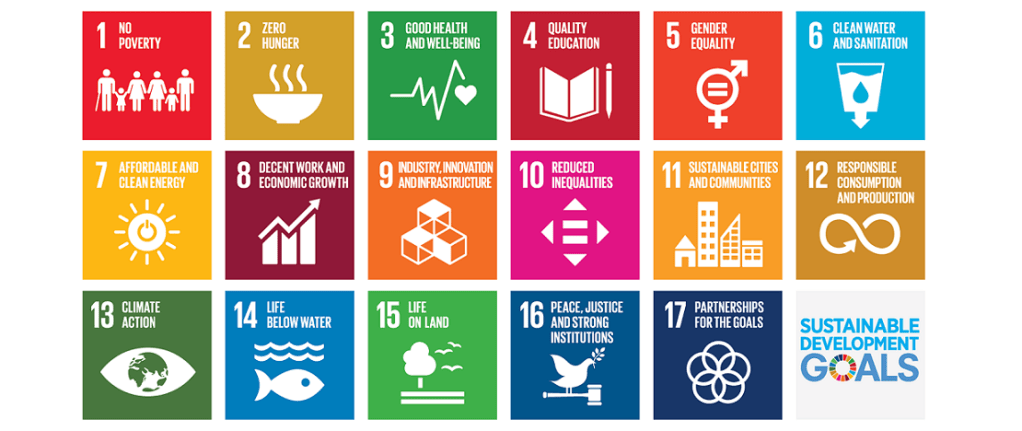
When we look down on our screens, we see the forest fires. When we turn on our TV’s we see the conflict. When we listen to the passionate activists we hear about the poverty. It’s so easy to be disheartened when we see the world around us, entrenched in problems. It’s why the clubs are so convenient, the alcohol so appealing, the Netflix binge so comforting. When we the youth look at the world, it can be easy to see how we are forever at the mercy of those in power. Those that can listen to our plea, and have the power to do something about. It’s uninspiring, the way so many handle power. And let’s face the reality of the world, that a lot of those who handle power, handle it to grow and maintain their power. Not to solve problems, which is how it should be. So we’re confronted with a bleak landscape where power is concentrated in the hands of those that show no sign of wielding it responsibly. But of course it’s not all doom and glow, for every dangerous problem gets met by a courageous act to usher in hope. Such as Greta Thunberg, whose Friday school strikes inspired a global movement to speak truth to power. I think of all the things the youth should be proud of today, it’s that we are actually the best hope we have. We’re the passionate, the ones that care. We’re the ones who have urged changed and acted on an individual level; I know so many people my age who are doing the little things to help ease the pressure that our consumer society forces on the environment. So many young ideas, to help ease the pressure. All acts that should be encouraged, but are sometimes met by the critics whose life purpose seems to be calling everyone out for not doing more. If you use a metal straw and yet still drive, you’re not doing enough. If you’re recycling and take a holiday by plane, you’re not doing enough. This is a problem within itself. We cannot expect perfection from anyone, but we should aim for perfection for ourselves. It is unreasonable to expect everyone to be doing absolutely everything to solve the climate crisis. We are all constrained to modern day life, which itself has been sustained on over-extraction and consumption. Hindering our ability to do more, by being a part of the system at fault. In any case, there’s one collective way forward out of problems. A campaign that crosses all national borders, enabling us to perfect the system we have so that it is not itself detrimental to our survival. Envisioned by the United Nations, and adopted by the 193 member states the Sustainable Development Goals (or the Global Goals) present a pathway forward towards a sustainable future. The 17 goals that make up the agenda target the problems that are causing inequalities, that are damaging the environment and are hindering any possibility of a peaceful future. Developing initiatives and pursuing efforts that realise the goals of the SDG agenda is the best way we have out of current situation. Holding our governments to account on the implementation of the SDGs is another avenue that needs to be actively pursued; they have already agreed to its adoption. The biggest problem that I myself put into this text was that we are the mercy of those in power do to something about this mess. My friends, we are the masters of ourselves, we have the power. That kind of power can be seen kindling in the ideals of the small when going up against the big. It’s an inspiring kind of power that calls forth all us to be better, and to do more. That’s where our power resides.

Myanmar’s Forgotten War – Will it Ever End?

It’s been a war waging for over 70 years. It’s been a problem that has perpetuated for such a long period of time that it looks impossible to solve. And yet it could be. Within Myanmar, the various power players seek to address the impossible. Knowing that whoever solves it, receives an unimaginable amount of credit. That credit and recognition would help decide the winners and losers of the hearts of a peoples that for so long have wanted peace. Peace protests have become a normal sight for me on my travels to Myanmar. Ceasefire after ceasefire, new arrangements after new arrangements. But the reality in the problem, is the problem solvers themselves. The relationships between the military, the government, and the ethnic armed organizations (EAOs) have a long history of distrust, human rights violations, and grievances. How can you problem solve, when the other side in negotiations is a long time enemy and one that has continuously perpetuated human rights violations and atrocities against one’s own. Finding the common ground seems always to be the key to building a positive relationship, finding this common ground for the players in Myanmar’s game seems to be an insurmountable challenge. Made forever more insurmountable because every player is out to win. Which I guess would be the most simplistic and understandable aim when waging war. Compromises after compromises, how much ground to give away, and how much to keep. Focusing on the common ground is always the right step forward. For one ethnic group does not suffer alone, far better it would be for neither group to suffer and instead to build a lasting peace. Very idealistic I know. But in terms of repairing damaged relationships between ethnic armed organisations and the central government, there needs to be a marriage counsellor. One organisation with the right connotations that can play the leading part and facilitate negotiations. Impartial of course, but with the predominant role. The marriage counsellor (the organisation) doesn’t need to be the one to take the credit, we all know how secret the process of negotiations are. A lot can be achieved behind closed doors, saving face for the players involved. But that requires already a major concession on the government’s part, and its not that third party mediators are not already involved in the observation group. But the third party that both of the main actors can trust, needs to be in the leadership seat. Of course I could also be wrong about my perspective. But I guess that’s what we all face when pushing ideas out there. And why not trust yourself enough to push out ideas. Is there a magic formula? There has to be one out there somewhere, we probably just haven’t found it. For every human problem there is a human solution. If we can create problems, we can solve them. This problem really needs one hell of a focus, backed by the international community, because the people of Myanmar deserve it. They deserve their peace, they haven’t had it for over 70 years. They are the most deserving of it. The most compassionate people you’ll ever meet, abandoned by their leaders, and forgotten by the world. The world works through reciprocal action, if leaders abandon their people, their people will abandon their leaders. If the world forgets a peoples, suffering through genocide and mass atrocities, that same world that forgot those peoples, will in turn be forgotten. “Injustice anywhere is a threat to justice everywhere – Martin Luther King.” For there is little chances of peace, without justice, for justice has the power to heal old wounds and move communities forward towards a future together.